Organizational Overview
Shree Pitambara Baglamukhi Sidh Peeth Uttarakhand is a professionally governed non-governmental organization established in August 2021, working across Lucknow and its peri-urban regions such as Sarojini Nagar and Amausi.
The organization operates where access to essential services remains significantly lower than the urban core, with disparities of 30–50% across education, infrastructure, healthcare, and livelihoods as reported in government datasets.

A Step Forward on the Global Stage
Our founding trustee met with distinguished dignitaries at the UK Parliament, London — a pivotal moment reflecting the growing recognition of Shree Pitambara Baglamukhi Sidh Peeth Uttarakhand's work in social development and community upliftment.
International Recognition of Our Social Mission
The reception by prominent British politician Andrew Rosindell (MP for Romford since 2001, former Shadow Minister for Foreign Affairs, and signatory of the landmark 2025 India-UK Free Trade Agreement with PM Narendra Modi) highlights the expanding international footprint of our mission.
Strengthening Global Partnerships for Community Development
Bilateral dialogues focused on establishing collaborative frameworks for rural literacy, digital empowerment, and sustainable public infrastructure in peri-urban Lucknow.
"Every handshake on the global stage is a step closer to bringing meaningful change to the communities we serve back home."
Bridging the Educational Divide
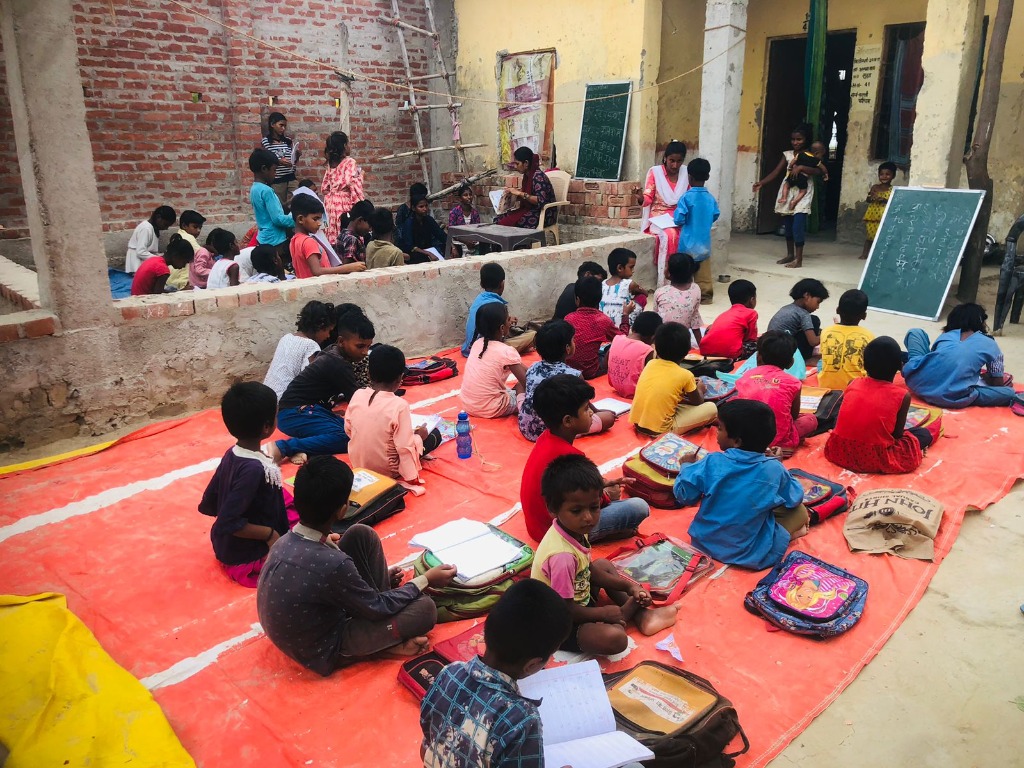
Lucknow district has an estimated population of 4.6–5 million, with nearly 35–40% residing in peri-urban belts. Access to quality education varies significantly between the core and these outskirts.
Digital access is a critical barrier: only 35–40% of peri-urban schools have functional digital infrastructure compared to 90%+ in urban institutions.
Our Data-Driven Response
-
Implemented smart and digital classrooms in public/private schools.
-
Established RBS training centers for free computer and AI education.
-
Distributed 250+ bicycles to overcome commuting barriers.
-
Provided laptops, tablets, and essential school support kits.
-
Upgraded structural school infrastructure for safer learning.
Infrastructure & Basic Services
30–45% of households in peri-urban areas still rely on handpumps despite improvements in piped water access. Groundwater levels are declining at 0.2–0.5 meters annually.
Action Taken
Installed 300+ handpumps and submersibles, water coolers, and filtration systems. Deployed hundreds of solar and street lights to improve safety and water access.
Healthcare Access
Addressing constrained healthcare access where 60–70% of expenditure is out-of-pocket. We provide medical aid, emergency support, and aid to orphans and widows to reduce immediate financial burden.
Livelihoods
Supporting the ~25–30% female labor force participation gap. Distributed sewing machines and enabled skill-based training to support financial self-reliance and community growth.
Our Collective Impact
Shree Pitambara Baglamukhi Sidh Peeth Uttarakhand operates in a high-need environment where Sectoral deficits overlap. By translating these gaps into direct, measurable impact, we strengthen community resilience across Lucknow.